

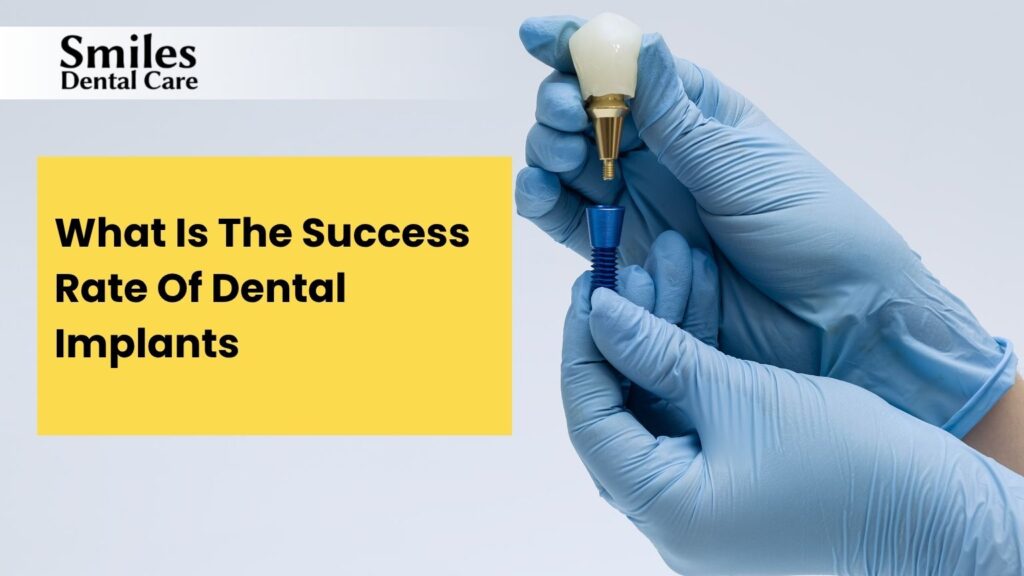
Most people who walk into Smiles Dental Care asking about dental implants arrive with the same question underneath everything else they say: Will this actually work for me? They have done their research, read the articles, and somewhere along the way landed on a number: 95 to 98 percent success rate. That number is broadly accurate. But a number without context does not help anyone make a real decision.
Success rates in dentistry are averages. They are drawn from thousands of patients across different age groups, health profiles, bone conditions, and clinics. The 95 to 98 percent figure tells you what happens across a wide population. It does not tell you what will happen in your specific mouth, with your specific bone, and your specific health history.
When patients ask us about dental implants in Parel Mumbai, what they really want to know is where they are likely to land within that range, and what they can do to influence it. That is exactly what this blog addresses.
What “Success” Actually Means for a Dental Implant
Before discussing numbers, it helps to understand what the dental profession counts as a successful implant. An implant is considered successful when it remains stable, functional, and comfortable over time, typically measured at five and ten-year intervals.
Implant success rate figures in clinical literature usually reflect:
- The implant remains firmly in the bone without loosening
- No persistent pain, infection, or nerve damage
- Adequate bone integration was maintained around the implant
- Surrounding tissue remaining stable
- The ability to function normally for biting and chewing
The survival rate of an implant is a slightly different measure. It simply means the implant is still present in the mouth, even if it has some complications. Success rate is the stricter standard, requiring the implant to be functioning well without ongoing problems.
At ten years, most published data puts the implant success rate for single tooth implants in healthy patients between 94 and 98 percent. Full mouth implant treatment success rate figures sit slightly lower due to complexity, typically 90 to 95 percent at ten years.
The Biological Process Behind Why Implants Work
An implant works because of a process called osseointegration. The titanium post that replaces the tooth root fuses directly with the jawbone over weeks to months, creating a stable anchor that functions like a natural tooth root.
This process is what separates an implant from any other form of tooth replacement. Among the options we provide for dental implants in Parel Mumbai, this biological integration is what makes long-term outcomes so consistent.
The timeline for this fusion process varies:
| Situation | Typical Healing Period |
| Standard bone, good health | 3 to 4 months |
| Upper jaw (softer bone) | 4 to 6 months |
| After bone grafting for implants | 4 to 9 months |
| Compromised health or thin bone | Extended, monitored closely |
After osseointegration is confirmed, the next stage is abutment placement. The abutment connects the implant to the final dental crown. The abutment placement and crown fitting are typically done in separate appointments.
What Actually Affects Whether an Implant Succeeds?
This is the most said thing in our clinic: “The same dental implants in Parel Mumbai procedure in two different patients can have different outcomes based on several factors.” Largely within the patient’s control.
Factors that improve implant success:
- Non-smoking status
- Good gum health at placement and throughout recovery
- Controlled systemic health, particularly diabetes
- Adequate bone volume at the implant site
- Following post-surgical instructions during implant healing time
Factors that increase risk:
- Active gum disease not treated before placement
- Uncontrolled diabetes or smoking
- Poor oral hygiene habits around the implant
- Bruxism (teeth grinding)
- Post surgical infection if home care instructions are not followed
Infection after surgery refers to an infection at the surgical site following implant placement. It can lead to peri-implantitis, which is essentially gum disease around an implant. When caught early, it is manageable.
The Role of Bone in Implant Outcomes
One common reason patients are told they may not be candidates for implants is insufficient bone. When a tooth is lost and not replaced promptly, the jawbone begins to shrink because it is no longer stimulated by a root.
Bone grafting is the solution. A graft material is placed in the deficient area and allowed to integrate before the implant is placed. Bone grafting for implants extends the timeline but opens up eligibility to patients who would otherwise not qualify.
At Smiles Dental Care, every assessment for dental implants in Parel Mumbai includes a thorough review of bone volume, nerve positions, and sinus proximity before any procedure is planned. This allows the implantologist to plan with precision before any procedure begins.
Single Tooth vs Full Mouth: Do Success Rates Differ?
Single tooth implant procedures tend to have the highest and most consistent success rates. For patients exploring dental implants in Parel Mumbai, the single tooth case is often the most predictable starting point. One implant, one crown, a predictable site.
Full mouth implant treatment involves more variables: multiple implants, staged procedures, and longer implant healing time.
A comparison of implant scenarios:
| Scenario | Complexity | Average Success at 10 Years |
| Single tooth implant | Low | 95 to 98% |
| Multiple implants, separate | Moderate | 93 to 97% |
| Full mouth implant treatment | High | 90 to 95% |
| Implants after bone grafting | Variable | 90 to 96% |
The ranges reflect the variety of patient health profiles, bone conditions, and surgical approaches that exist in real-world practice rather than controlled clinical trials.
What the Process Actually Involves, Step by Step?
The process takes place in stages. The full journey from placement of dental implants in Parel Mumbai, at Smiles Dental Care to final crown takes three to six months, sometimes longer if grafting is needed.
Stages of the implant procedure:
- Comprehensive consultation, scans, and treatment planning with the implantologist
- Implant placement (the artificial tooth root is placed into the jawbone under local anaesthesia)
- Implant healing time for bone fusion to occur
- Abutment placement once integration is confirmed
- Impressions and fabrication of the final dental crown
- Crown fitting and bite adjustment
- Ongoing implant maintenance and care with regular check-ups
The artificial tooth root used in modern implants is made of titanium, a material that the body does not reject and that has been used in orthopaedic and dental applications for decades. Its surface is treated to encourage rapid bone integration.
Frequently Asked Questions
How long does it take for a dental implant to feel normal?
Most patients report that the implant feels entirely natural once the dental crown is in place and the bite is adjusted. During the healing period, mild pressure or sensitivity is expected. Most patients say they forget the implant is not their natural tooth once the full implant procedure is complete.
Does bone grafting always delay implant placement?
In some cases, bone grafting for implants and implant placement can be done in the same appointment if conditions allow. When the graft is more extensive, a separate healing period of four to nine months is required. The implantologist will advise on the appropriate approach after reviewing the scan.
What is the most common reason implants fail?
The most common reasons are post surgical infection (peri-implantitis from inadequate oral hygiene) and poor bone integration due to smoking or systemic conditions. Early failure during osseointegration is usually health-related. Late failure is almost always related to gum health and maintenance habits.
Can implants be done if I already have gum disease?
Active gum disease must be treated and stabilized before implant placement. The bacteria that cause gum disease can affect the bone and tissue around an implant, which is why we assess gum health before the implant procedure. Once stable, implant placement can proceed safely.
How often do I need to come in after getting an implant?
We recommend check-ups every six months as part of implant maintenance and care. These appointments allow us to assess the surrounding bone and tissue and clean areas that brushing does not reach. Your tooth replacement lasts significantly longer with consistent professional monitoring alongside good home care.
What Good Numbers Actually Come From…
The 95 to 98 percent success figures are real, but they are not automatic. They come from careful patient selection, thorough planning, skilled placement, and consistent follow-up. At Smiles Dental Care, when we discuss dental implants in Parel Mumbai with patients, we always say the same thing: the procedure itself is one part of the outcome. Outcomes reflect both clinical skill and patient commitment. The patient’s commitment to healing, hygiene, and maintenance appointments is equally important.
An implant placed into healthy bone, in a non-smoking patient who maintains their gum health and attends review appointments, will almost always reach that bracket. This is what we see consistently at Smiles Dental Care. The factors that pull the number down are almost always addressable before treatment begins.